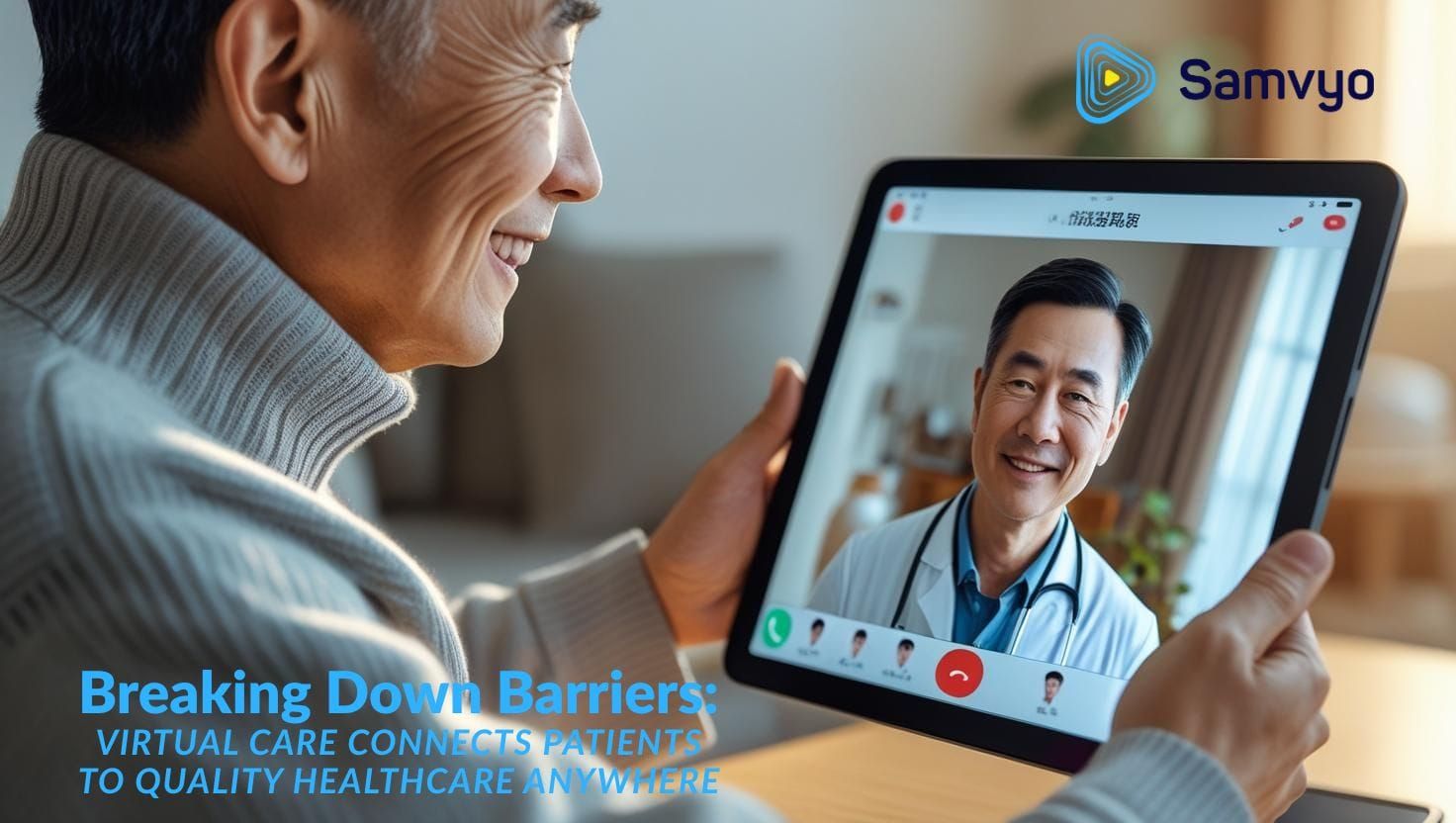
The healthcare industry stands at a pivotal moment. Virtual care adoption has accelerated dramatically, yet many healthcare systems struggle with fragmented communication infrastructure that limits the full potential of their virtual care investments. The solution isn't to replace existing systems—it's to enhance them through strategic technology partnerships that create seamless, integrated virtual care ecosystems.
The Hidden Crisis in Virtual Care Implementation
While virtual care platforms have transformed healthcare delivery, a closer look reveals significant communication challenges that impact patient outcomes and operational efficiency:
The Statistics Tell a Concerning Story:
- 67% of virtual nursing implementations face video quality issues that directly affect clinical decision-making
- 45% of AI-powered monitoring systems generate false alerts due to poor video feed quality
- Healthcare systems spend an average of $28,000 annually per virtual care station with limited communication capabilities
- 52% of smart hospital initiatives struggle with integration complexity
- Clinical efficiency drops by 38% due to communication delays between virtual and bedside teams
These aren't just technical issues—they're barriers to delivering optimal patient care and achieving the ROI that virtual care promises.
The Virtual Care Ecosystem: More Than Just Video Calls
Modern virtual care encompasses three critical domains, each with unique communication requirements:
Virtual Nursing & Remote Patient Monitoring
Virtual nursing has evolved beyond simple video consultations. Today's virtual nursing stations require:
- Ultra-HD video quality for accurate clinical assessments
- Scalable communication supporting multiple simultaneous patient observations
- Seamless integration with Electronic Health Records (EHR)
- Real-time collaboration between remote nurses and bedside clinical teams
AI-Powered Patient Monitoring Systems
The integration of artificial intelligence in patient monitoring creates new communication demands:
- Computer vision systems requiring optimized video feeds for accurate analysis
- Fall prevention and patient surveillance systems needing enhanced video quality
- Real-time alert systems connecting AI detection with clinical response teams
- Smart hospital solutions requiring unified communication across multiple platforms
Digital Health & Telehealth Platforms
Comprehensive digital health solutions demand enterprise-grade communication infrastructure:
- Remote patient monitoring with multi-modal communication capabilities
- Mobile health applications requiring secure, scalable communication backbone
- Clinical decision support systems needing real-time data exchange
- Population health management platforms with integrated communication workflows
The Partnership Imperative: Integration Over Replacement
The most successful virtual care implementations don't result from replacing existing systems—they emerge from strategic partnerships that enhance current investments while addressing communication gaps.
Enhanced Virtual Nursing Through Strategic Integration
Consider the transformation possible when virtual nursing platforms integrate with enterprise-grade communication solutions:
Before Integration:
- Limited observer-to-patient ratios due to communication constraints
- Video quality issues affecting clinical assessment accuracy
- Fragmented workflows between virtual observation centers and bedside teams
- High per-station technology costs with limited scalability
After Strategic Partnership:
- 150% improvement in observer-to-patient ratios through enhanced communication efficiency
- Crystal-clear 4K video streaming enabling accurate remote clinical assessments
- Unified communication platforms connecting virtual and bedside teams seamlessly
- $40,000 annual savings per virtual care station through optimized technology deployment
AI-Enhanced Monitoring with Communication Excellence
The integration of advanced communication infrastructure with AI-powered monitoring systems creates unprecedented clinical capabilities:
Smart Hospital Communication Enhancement:
- AI-optimized video feeds improving computer vision accuracy by 80%
- Real-time clinical alerts with instant communication triggers
- Voice recognition and vital sign monitoring integration
- Predictive communication routing based on patient acuity levels
Clinical Automation Benefits:
- 65% reduction in false alerts through superior video quality
- 55% reduction in clinical documentation burden through automated workflows
- $125,000 annual operational cost savings per facility
- 70% improvement in cross-department collaboration efficiency
The Technical Architecture of Integrated Virtual Care
Successful virtual care integration requires a three-layer approach:
Layer 1: Infrastructure Excellence
- Native API connectivity with existing virtual care devices and AI monitoring systems
- Cloud-native architecture supporting unlimited virtual care expansion
- Edge computing capabilities for reduced latency in critical care scenarios
- Redundant systems ensuring 99.99% uptime for patient safety
Layer 2: Communication Superior
- Ultra-high definition video streaming for accurate clinical assessments
- Advanced audio processing with noise cancellation for clear hospital communication
- Multi-party conferencing supporting complex clinical consultations
- Cross-platform integration across desktop, tablet, and mobile devices
Layer 3: Clinical Workflow Optimization
- Intelligent call routing based on clinical priorities and staff availability
- AI-powered clinical note generation from video consultations
- Advanced alert management with intelligent escalation systems
- Real-time HIPAA audit trails and regulatory compliance monitoring
Real-World Impact: Measurable Results
The benefits of strategic virtual care partnerships extend beyond theoretical improvements—they deliver measurable results that impact both clinical outcomes and financial performance:
Clinical Excellence Metrics
- 40% faster emergency response times through optimized communication workflows
- 50% improvement in patient satisfaction scores for virtual care interactions
- 30% reduction in preventable adverse events through enhanced monitoring communication
- 25% increase in virtual care platform adoption rates
Operational Efficiency Gains
- 60% faster customer deployment leading to accelerated implementation timelines
- 45% improvement in customer satisfaction scores
- 50% reduction in integration complexity and deployment resources
- 30% decrease in ongoing technical support requirements
Financial Performance Impact
- Traditional virtual care systems: $125,000 annual cost per station
- Integrated enhanced systems: $85,000 annual cost per station
- Net annual savings: $40,000 per virtual care station
The Partnership Advantage: Why Integration Wins
The most successful virtual care implementations recognize that excellence comes through strategic partnerships rather than single-vendor solutions. Here's why:
Technical Superiority
- Rapid deployment in days rather than months
- Unlimited scalability without performance degradation
- Healthcare-grade security with end-to-end encryption
- AI-optimized architecture purpose-built for virtual care environments
Clinical Impact
- Enhanced patient outcomes through improved communication quality
- Streamlined workflows reducing administrative burden on clinical staff
- Comprehensive cost optimization through unified platform approaches
- Built-in regulatory compliance with automated audit trails
Strategic Value
- Partnership-first approach enhancing existing investments
- Open integration supporting multiple platform ecosystems
- Continuous innovation ensuring compatibility with emerging technologies
- Dedicated customer success programs optimizing ROI
Implementation Roadmap: From Vision to Reality
Successful virtual care enhancement follows a structured implementation approach:
Phase 1: Assessment & Integration (Weeks 1-2)
- Comprehensive virtual care workflow analysis
- Communication bottleneck identification and resolution planning
- Device integration testing and video quality optimization
- Clinical team training on enhanced communication capabilities
Phase 2: Enhanced Workflow Deployment (Weeks 3-4)
- Multi-site virtual care center connectivity implementation
- AI-powered clinical priority routing configuration
- Advanced analytics integration for performance optimization
- Mobile communication extension for clinical staff flexibility
Phase 3: Scale & Optimization (Months 2-3)
- Enterprise-wide expansion across hospital systems
- Advanced AI integration for predictive communication routing
- Cross-platform data analytics for continuous improvement
- Strategic partnership development with additional healthcare technology vendors
Looking Forward: The Future of Integrated Virtual Care
The healthcare industry's digital transformation continues to accelerate, and the organizations that thrive will be those that embrace strategic partnerships to create comprehensive, integrated virtual care ecosystems.
Emerging Opportunities
- Next-generation virtual care features including predictive analytics
- Multi-platform integration supporting diverse healthcare technology ecosystems
- International expansion of integrated virtual care solutions
- Industry leadership through clinical research and evidence-based outcomes
The Competitive Imperative
Healthcare organizations face a clear choice: continue managing virtual care communication limitations while competitors advance integrated solutions, or embrace strategic partnerships that deliver comprehensive virtual care platforms with superior clinical results, operational efficiency, and financial performance.
Conclusion: Partnership as Strategy
The future of virtual care isn't about choosing between different technology vendors—it's about creating strategic partnerships that enhance existing investments while addressing critical communication gaps. The most successful healthcare systems will be those that recognize virtual care excellence comes through integration, not replacement.
By embracing partnerships that enhance rather than compete with existing virtual care investments, healthcare organizations can deliver superior patient outcomes, achieve operational excellence, and realize the full financial potential of their virtual care initiatives.
The question isn't whether to enhance your virtual care capabilities—it's whether you'll lead the transformation or follow others who recognize that strategic partnerships are the key to virtual care excellence.
Ready to explore how strategic partnerships can transform your virtual care capabilities? Contact us at hello@samvyo.com or here, to discuss integration opportunities that can enhance your existing virtual care investments while delivering measurable improvements in clinical outcomes, operational efficiency, and financial performance.
